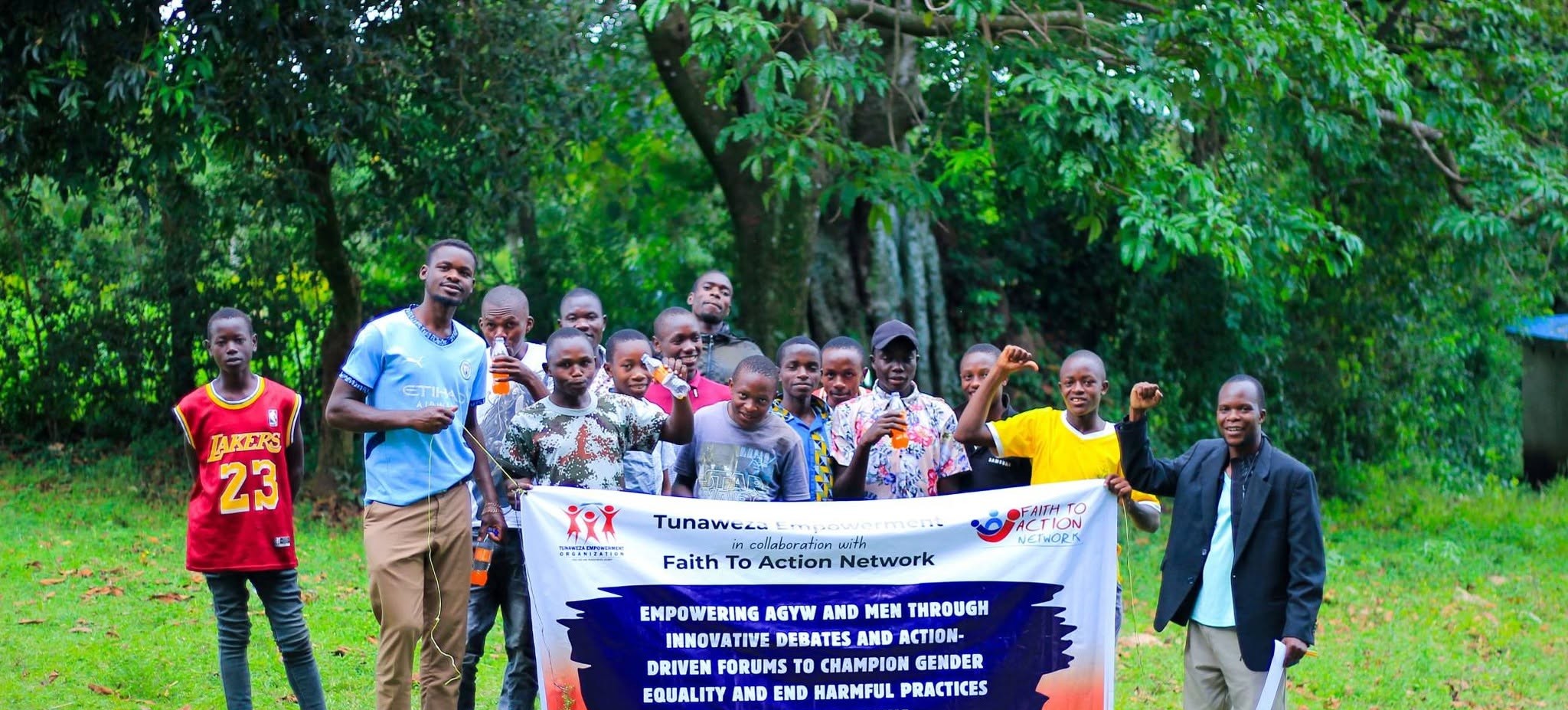
On International Men’s Day, we celebrate the power of positive masculinity and the faith leaders, fathers and young men contributing to more equitable, healthy and peaceful communities.
Advancing gender equality requires more than empowering women and girls. It also requires engaging men and boys in examining the attitudes, social expectations and behaviours that shape relationships, families and communities.
Across many communities, men continue to exercise considerable influence over decisions affecting family wellbeing, girls’ education, relationships and community life. This influence presents an important opportunity: men can either reinforce harmful gender norms or help transform them.
For Faith to Action Network, engaging men is an essential part of advancing gender justice and building peaceful, inclusive communities. Working alongside religious leaders, member organisations and grassroots partners, the network creates opportunities for men and boys to reflect on gender norms, challenge harmful practices and become active partners in building more equitable relationships and communities.
This engagement takes different forms, from community dialogues and faith-based advocacy to family health initiatives and intergenerational mentorship.
Four Ways Faith to Action Network Engages Men and Boys for Change
1. Creating Spaces for Honest Conversations
Changing harmful gender norms begins with creating opportunities for honest reflection. Through participatory workshops, community dialogues and facilitated discussions, men and boys are encouraged to examine how expectations around masculinity influence their relationships, families and communities.
These engagements move beyond simply raising awareness. They create space to question unequal power relations, reflect on accountability, challenge violence and consider how men can demonstrate leadership through care, respect and responsibility. By encouraging men to become part of the conversation, Faith to Action Network and its partners support a shift from passive awareness to personal and collective action.
2. Grounding Gender Justice in Faith and Sacred Teachings
Faith leaders and institutions have considerable influence in shaping attitudes, values and behaviour. Faith to Action Networ works with faith actors across religious traditions to harness this influence in promoting gender equality, human dignity and the prevention of GBV.
Through interfaith dialogue, advocacy and engagement with religious leaders, the Network encourages critical reflection on how faith teachings can support gender justice and challenge harmful interpretations and practices. Initiatives such as the Joint Interfaith Declaration on Gender Justice and Sacred Equity provide an important platform for faith leaders to articulate shared commitments to dignity, equality and ending gender-based violence.
This approach recognises that sustainable change requires faith communities to be part of both the conversation and the action.
3. Championing Shared Care and Family Health
Gender equality is also shaped by what happens within families. Expectations around caregiving, household responsibilities, decision-making and reproductive health often place unequal burdens on women and girls.
Through our work on family health and wellbeing, Faith to Action Network engages faith actors and community partners in conversations that encourage men’s involvement in responsible fatherhood, shared care and informed family decision-making.
Collaborations with religious councils, health institutions and other partners create opportunities to engage men on issues including family planning, maternal health, adolescent sexual and reproductive health and rights, and HIV prevention. These efforts recognise that improving family health outcomes requires men to be informed, involved and supportive partners, while respecting the rights and agency of women and girls.
4. Mentoring the Next Generation
Building more equitable communities also means engaging boys and young men early, before harmful gender expectations become deeply entrenched.
Through youth engagement, mentorship and intergenerational dialogue, the Network and its partners create opportunities for young people to explore healthy relationships, respectful communication, gender equality and sexual and reproductive health and rights. Older male role models, faith leaders and community champions can help demonstrate that strength is expressed through respect, empathy and accountability rather than dominance or control.
From grassroots community engagements to regional initiatives across Africa, these conversations contribute to building a generation of young men who can challenge harmful norms and champion more inclusive communities.
A shared responsibility for change
On International Men’s Day, Faith to Action Network recognises men and boys who are choosing to be part of the solution: fathers who support their daughters’ aspirations, faith leaders who challenge harmful norms, male role models who promote respectful relationships and community members who take responsibility for preventing violence.
Building gender-just communities is a collective undertaking. Men are not simply beneficiaries or observers of this change; they are essential partners in making it possible.
The question is not whether men should be part of the gender justice conversation, but how they can translate that participation into sustained action