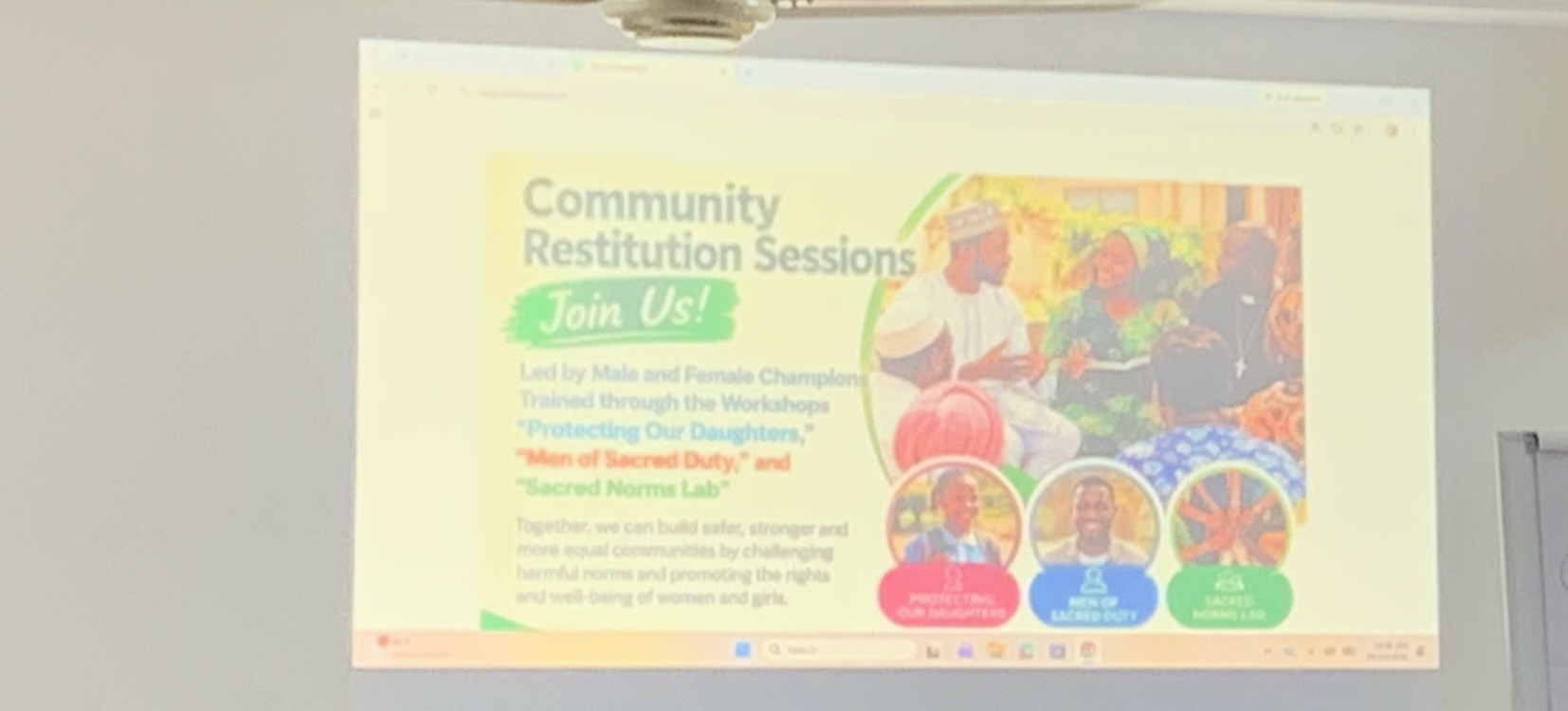
In Tamale, Ghana, a community restitution session brought together 40 participants to turn lessons on gender justice into shared responsibility for protecting women and girls. Through positive masculinity, dialogue on harmful social norms, and awareness of girls’ rights, the Faith Movement for Gender Justice programme is helping take conversations about gender-based violence beyond trained champions and into the wider community.
What does it take to change the social norms that leave women and girls vulnerable to violence? Training champions is an important first step, but lasting change also depends on whether the lessons reach the families, religious leaders, young people and communities that shape everyday attitudes and behaviour
This was the thinking behind a community restitution session held in Tamale, Ghana, on 15 October 2026. In partnership with Songtaba and the Tiyumba Hope Foundation, Faith to Action Network organised the session that brought together approximately 40 community members to share lessons from three training modules delivered earlier in the year under the Faith Movement for Gender Justice (FM4J) programme.
The session focused on three complementary approaches: Protecting Our Daughters, which addresses the protection of girls and gender-based violence; Men of Sacred Duty, which promotes positive masculinity and men’s responsibility in creating safe environments; and the Sacred Norms Lab, which creates space to question harmful social and religious norms.
The objective was clear: to extend these lessons beyond the champions trained in July and encourage a wider community to take responsibility for protecting women and girls.
Taking the lessons beyond the training room
Community restitution provides an important bridge between training and action. By sharing knowledge with a broader audience, trained champions can help reinforce messages within their own communities, while parents, young people and religious leaders can reflect on how social expectations influence their attitudes and decisions.
The Tamale session opened with remarks from representatives of Songtaba, the Tiyumba Hope Foundation and Faith to Action Network. Together, the three organisations reaffirmed the importance of sustained collaboration between local organisations and faith-based actors in advancing the protection of women and girls. The discussions that followed connected individual responsibility with the wider social and legal frameworks that safeguard girls’ rights.
Protecting Our Daughters: Making girls’ rights a community responsibility
The session on Protecting Our Daughters and the Sacred Norms Lab, facilitated by Girls Not Brides Ghana, explored gender-based violence, harmful social norms and the rights of girls under Ghanaian law.
Participants reflected on girls’ rights to life, health, safety and education, as well as their right to protection from abuse, exploitation and violence. The discussion also emphasised their right to be heard in decisions affecting their lives.
Particular attention was given to Ghana’s legal minimum age of marriage of 18. Grounding the discussion in national legislation, including the Children’s Act and the Domestic Violence Act, helped connect the protection of girls with existing legal obligations.
Why this matters: Harmful norms can persist when they are accepted without question or reinforced across generations. Community dialogue creates opportunities to challenge these expectations, strengthen awareness of girls’ rights and encourage families and community leaders to become active partners in preventing violence and harmful practices.
Men of Sacred Duty: Reframing masculinity as responsibility
The Men of Sacred Duty session, facilitated by Activista Ghana, invited men to reflect on the kind of leadership that women and girls need from them.
Rather than equating masculinity with authority or control, the discussion promoted responsibility, integrity, respect and non-violence. Five interconnected themes guided the conversation:
- Positive masculinity: Managing emotions, communicating openly and being willing to seek help.
- Shared responsibility: Speaking out against abuse and taking an active role in protecting women and girls.
- Healthy family relationships: Sharing household responsibilities fairly and building respectful relationships.
- Leadership through example: Exercising leadership by listening, demonstrating integrity and supporting the safety and dignity of others.
- Non-violence and respect: Resolving conflict peacefully, respecting consent and recognising the dignity of every person.
The session concluded with a practical group exercise on how participants could embody these principles in their daily lives.
One question captured the challenge at the heart of the discussion: If boys in our communities grew up behaving exactly as the men around them behave today, would women and girls be safer, more respected and better supported?
The question invited participants to consider the influence of everyday behaviour on the next generation and the role men can play in challenging harmful attitudes.
Men and boys can be important allies in preventing gender-based violence when they actively challenge harmful behaviours, model respectful relationships and use their influence to promote safety and equality. Positive masculinity is not simply about individual conduct; it is also about helping create family and community environments where women and girls can live free from violence.
From Dialogue to Action: Everyone Has a Role to Play
The restitution session marked an important step in extending the lessons of the July 2026 workshops to a wider community audience. It reinforced an important lesson: protecting women and girls requires more than awareness. It calls for individuals, families, faith communities and community leaders to challenge harmful norms, model respectful relationships and take a stand against gender-based violence.
Sustaining this momentum requires continued engagement with community champions, parents, men and boys, and religious leaders. It also requires turning commitments made during dialogue into practical action: challenging harmful norms, speaking out against violence, promoting respectful relationships and supporting the rights and wellbeing of girls.
For Faith to Action Network and our partners, the experience reinforces a central lesson: gender justice advances when knowledge moves beyond training rooms and becomes a shared commitment reflected in everyday attitudes, relationships and community action.
Through the Faith Movement for Gender Justice (FM4J) programme, we are working to ensure that conversations about gender justice translate into shared responsibility and action within communities.
Join Faith to Action Network and its partners in advancing gender justice. Start a conversation in your community, challenge a harmful norm or take a practical step towards making your home, faith community or organisation safer for women and girls.
Together, we can turn faith into action and make the protection, dignity and rights of every woman and girl a shared community commitment.